The Challenge
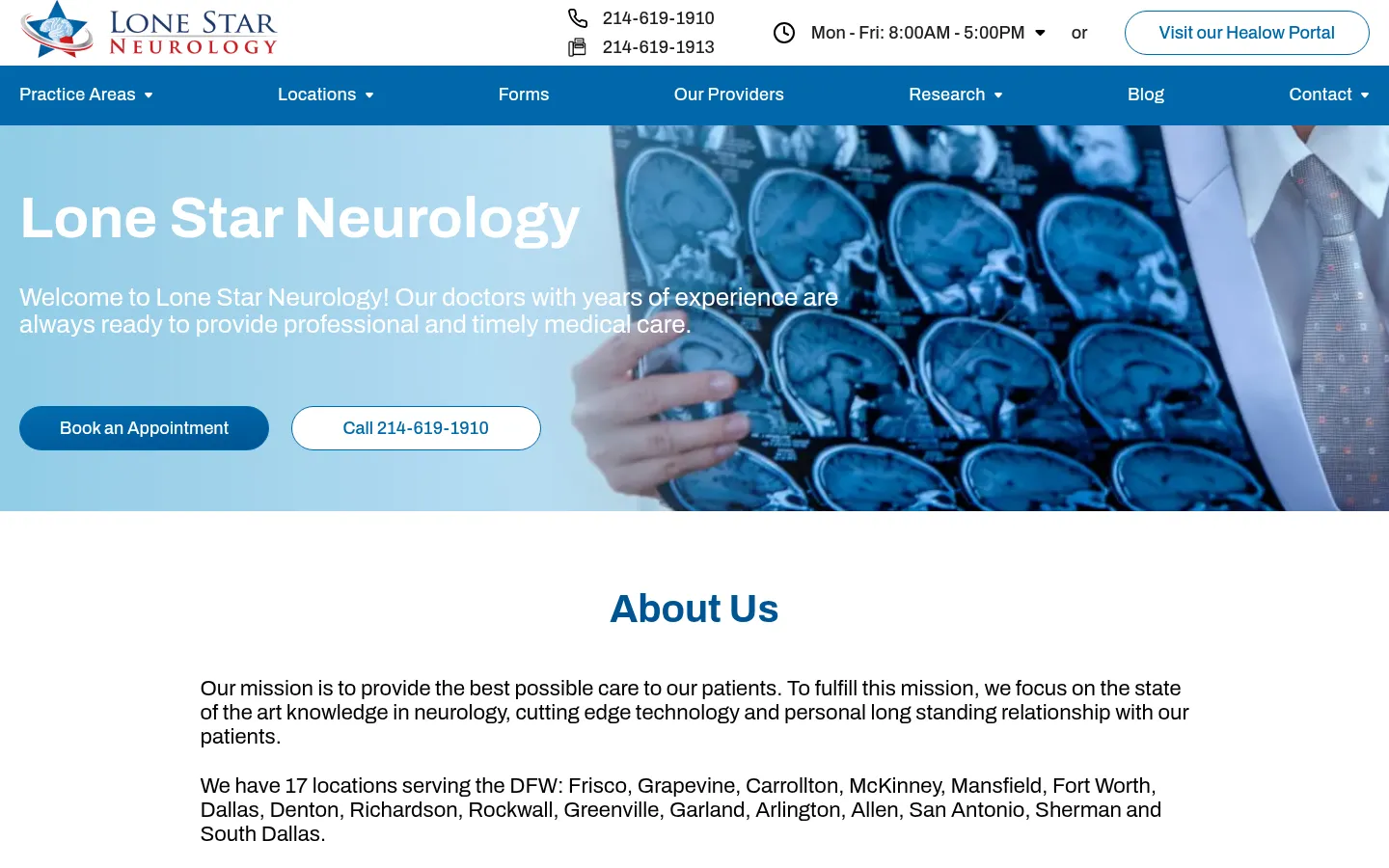
Lone Star Neurology is a multi-location neurology and neuroscience practice serving patients across the Dallas-Fort Worth metroplex and wider Texas region. Operating across multiple clinic locations compounds the standard healthcare website challenges significantly: each location needs independent SEO visibility, local schema markup, and location-specific content, while the overall brand must present as a unified, authoritative practice network rather than a collection of disconnected clinics.
The core challenge of neurology clinic website design at multi-location scale is the local-global tension in both UX and SEO. A patient in Frisco searching for a neurologist is performing a hyper-local search — they need to see a clinic in their area, with appropriate location signals, local reviews, and clinic-specific information. But the overall practice must also rank for broader Texas neurology queries that drive referral traffic. Serving both simultaneously requires deliberate architecture decisions at the site structure level.
Google's YMYL standards applied with particular force. Neurology is a medical specialty where search quality raters scrutinise content rigorously — the combination of medical conditions, treatment information, and physician credentials must be presented with a level of E-E-A-T depth that general web design agencies rarely understand. The SEO and content architecture needed to be built by people who understood what "medically reviewed" actually means in a Google quality evaluation context.
The Strategy
- Multi-location WordPress architecture — built a site structure that serves both the master practice brand and each individual clinic location, with location-specific pages carrying their own schema markup, local content, physician profiles, and contact information while remaining part of a unified brand experience
- YMYL-compliant E-E-A-T implementation — integrated physician credentials (board certifications, residency programmes, published research, hospital affiliations) into a structured credibility architecture, with appropriate author attribution on clinical content and referenced medical sources
- Patient-journey UX design — mapped and designed the complete patient journey from symptom search through to confirmed appointment: condition information pages, specialist matching, location selection, and appointment booking flow each optimised to reduce cognitive load and eliminate friction
- Medical SEO architecture — implemented structured data (MedicalClinic, Physician, MedicalCondition, MedicalProcedure schemas), built location-specific SEO pages, optimised for Google Business Profile integration, and developed a blog content strategy targeting Texas neurology patient searches
- Blog and educational content system — implemented a WordPress blog optimised for the specific long-tail medical queries that Lone Star Neurology's patient base searches: condition explainers, treatment guides, and patient preparation content that builds topical authority and drives organic appointment enquiries
- Responsive design for patient accessibility — designed every page for seamless performance across devices, with particular attention to the mobile appointment booking flow which a significant proportion of patients complete on smartphones immediately after a GP referral
The Results
Why this matters
Multi-location medical practices that don't invest in proper site architecture leak significant organic search value. A neurology network with six locations that ranks well for the master brand but not for individual location queries is effectively invisible to the majority of patients who search with local intent — which is most of them. Medical clinic website development at multi-location scale requires treating each location as its own SEO entity while maintaining the brand authority of the network.
YMYL healthcare website design requires a depth of medical content knowledge that general web agencies do not provide. Google's quality raters evaluate medical websites differently from other categories — they look for demonstrated clinical expertise, proper source attribution, physician authorship, and content that genuinely serves patient needs. Building to this standard is not optional for a practice that wants to rank competitively for high-value medical queries.
The E-E-A-T implementation went beyond credential display. Listing a physician's board certifications in a sidebar does not constitute demonstrated expertise in Google's quality evaluation framework. What works is integrated expertise: physicians named as authors on condition-specific articles, medical claims referenced to published sources, and treatment information reviewed and dated by named clinical staff. This level of editorial rigour is what separates medical websites that rank from those that don't.
If you are managing a neurology website design project, a multi-location medical practice site, or any healthcare platform competing in YMYL categories, Lone Star Neurology demonstrates the architecture and content approach that earns and maintains competitive rankings in the most scrutinised category in search.