The Challenge
Visit Pinehurst is a destination travel guide covering the Pinehurst, Southern Pines, and Aberdeen area of North Carolina — a region known for world-class golf, historic village character, and upscale leisure. The challenge was a structural one common to regional destination platforms: travel information for the area existed in scattered form across multiple sources — local tourism boards, review platforms, individual hotel and restaurant websites — but nowhere had organised it into a single, authoritative, beautifully presented resource that a visitor planning a trip could actually use.
The core challenge of city guide website design is curation over completeness. A destination website that lists every restaurant, every hotel, and every attraction in a region is not a guide — it is a database. The visitor who is planning a long weekend in Pinehurst does not need every option: they need the right options, presented with enough editorial context to make a confident choice. The platform needed to exercise genuine curatorial judgment rather than defaulting to exhaustive listing.
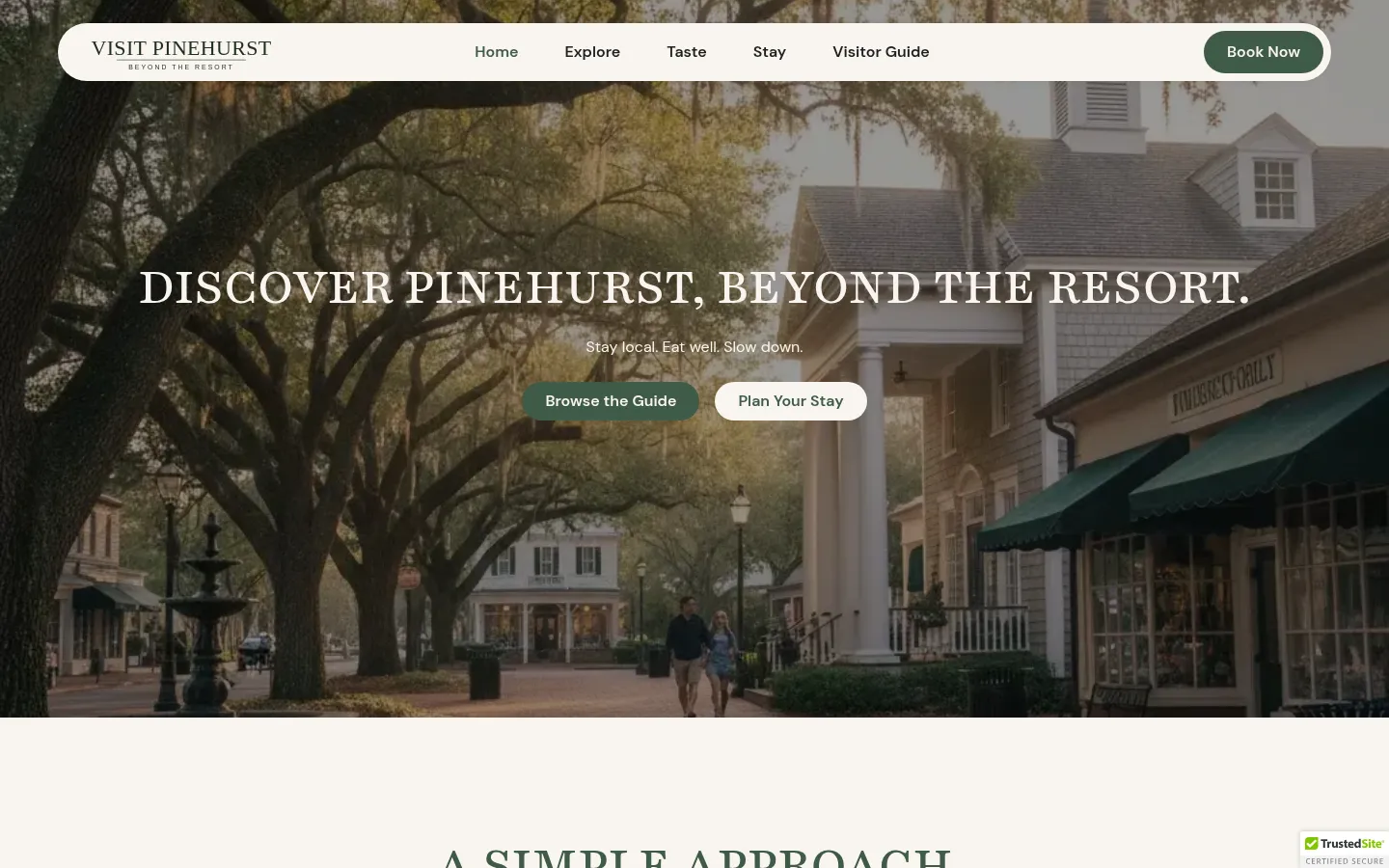
The prestige positioning of the Pinehurst area — a destination associated with the US Open, historic resort hotels, and upscale leisure — required a design language that matched that positioning. A generic tourism website template, with its busy layouts, competing CTAs, and stock photography, would actively undermine the destination's premium character. The design needed to communicate that this was a destination worth visiting before a visitor read a single recommendation.
The Strategy
- Editorial design system with prestige positioning — developed a minimalist, white-space-led design language that communicated the character of Pinehurst through restraint and visual quality: large-format destination photography, refined typography, and the absence of visual noise that separates editorial travel platforms from directory-style tourism sites
- Three-city unified information architecture — structured the platform to serve all three cities — Pinehurst, Southern Pines, and Aberdeen — within a single coherent navigation system, with city-specific sections for restaurants, walking routes, accommodation, and events that maintained clear geographic organisation without creating a fragmented multi-site experience
- Curated content design over exhaustive listing — designed content templates that supported editorial recommendation rather than encyclopaedic listing: each restaurant, hotel, and attraction featured with a specific recommendation reason, editorial photography, and the contextual information that makes the recommendation genuinely useful rather than merely comprehensive
- Trip planning UX — built itinerary-adjacent content features allowing visitors to understand how to sequence their Pinehurst visit — where to eat before a round of golf, where to walk after dinner, which weekend schedule works for a first-time visitor versus a returning guest — making the platform a genuine planning tool rather than a reference database
- WordPress CMS for editorial independence — implemented a content management system allowing the Visit Pinehurst team to publish seasonal recommendations, update event listings, add new venues, and maintain the editorial currency that destination guides require without developer involvement
- Destination SEO architecture — built structured data for local business listings, developed a keyword-targeted content architecture for Pinehurst travel queries, and implemented a local SEO strategy targeting visitors researching the destination across golf, accommodation, and dining categories
The Results
Why this matters
Destination websites succeed when they earn the trust of a traveller in the research phase — the point at which the visitor is planning rather than booking. A platform that is genuinely useful during research will be the platform the visitor returns to for recommendations during their trip. A travel information website that is merely comprehensive without being curated will be used once, discarded, and replaced by a search query when the next question arises.
City guide website design is editorial product design. The decisions about what to include, how to describe it, and what context to provide around each recommendation are design decisions as much as content decisions. A destination guide whose editorial voice is genuinely useful and whose design lets the place speak for itself will retain visitors and earn the organic authority that makes it the first result the next traveller sees.
The prestige positioning was the most consequential design decision in terms of long-term platform value. The Pinehurst area attracts visitors who are making considered leisure investments — a golf resort weekend or a historic village stay is not an impulse decision. The platform that communicates the quality of that experience through design quality — through typography, white space, and photography direction — earns the trust of that visitor before any recommendation is made.
If you are building a city guide website design, a destination tourism platform, or any travel information website that needs to communicate both curatorial authority and prestige destination positioning, Visit Pinehurst demonstrates the editorial design approach and WordPress architecture that destination guides need to earn and hold their audience.