The Challenge
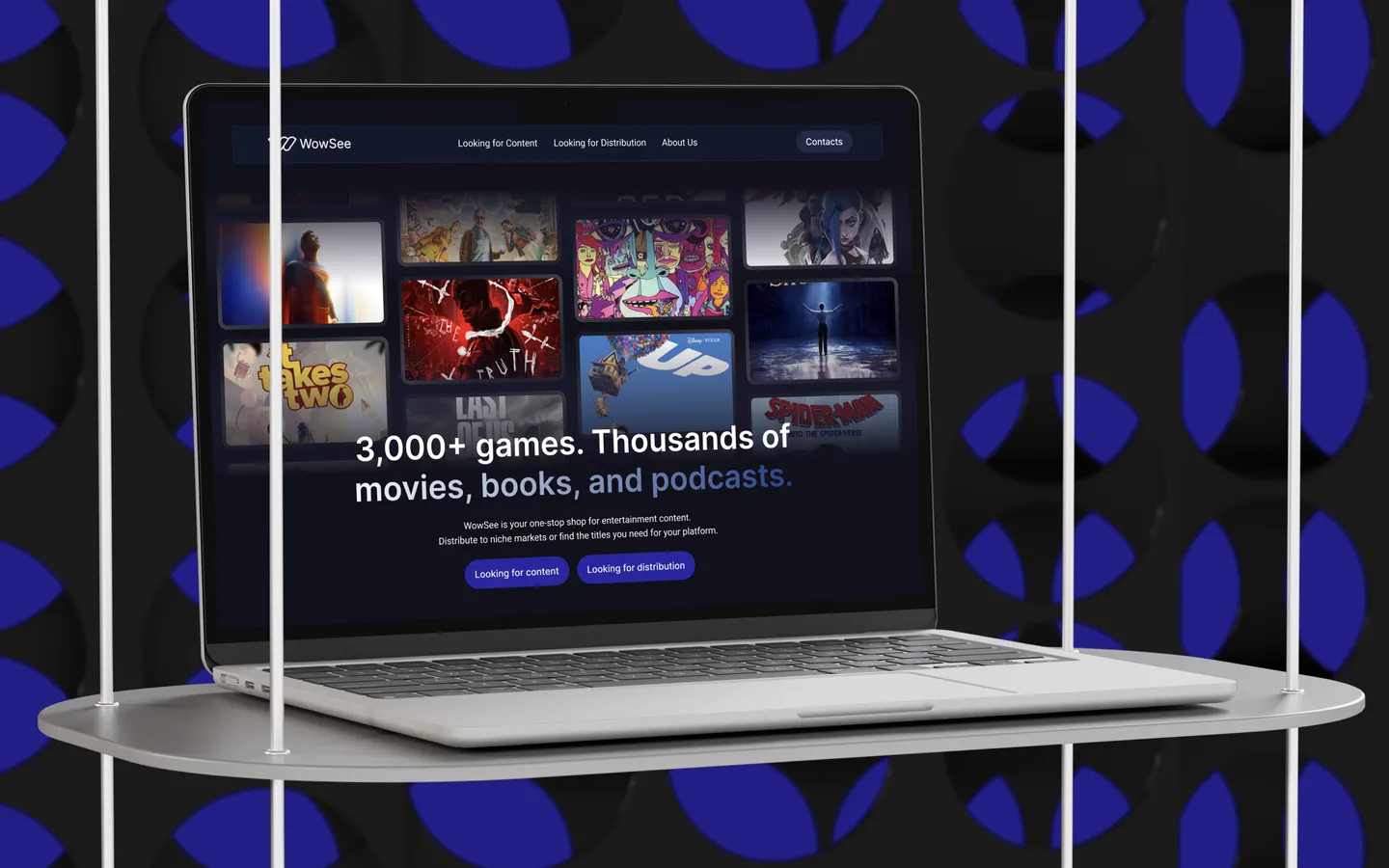
WowSee is an entertainment aggregation platform bringing together movies, series, music, and games — content categories that users currently access through a fragmented ecosystem of separate subscriptions, each with its own interface, discovery logic, and recommendation system. The commercial proposition was clear: a unified entertainment platform that reduced subscription fatigue and content fragmentation. The design challenge was equally clear: every element of the UX needed to match the discovery quality that category-leading platforms like Netflix and Spotify had established as the user expectation baseline.
The core challenge of entertainment website design for an aggregator is the dual-audience problem. Consumer users need seamless content discovery: they arrive knowing they want to be entertained but often without a specific content choice in mind. The platform's job is to surface the right content at the right moment, with enough contextual recommendation to feel genuinely personalised rather than algorithmically arbitrary. Content partner users — distributors and studios whose content appears on the platform — need a completely different experience: catalogue management tools, performance analytics, and distribution control interfaces that serve professional operational needs.
The personalisation architecture presented a specific UX challenge: WowSee aggregated four distinct content categories — film, television, music, and gaming — each with its own discovery conventions, metadata structures, and user engagement patterns. A recommendation system that treated all four categories identically would produce poor recommendations in each. The design needed to accommodate category-specific discovery patterns while maintaining the unified brand experience that made the aggregator proposition coherent.
The Strategy
- Unified content discovery UX — designed a home experience that surfaced curated content recommendations across all four media categories through a personalisation engine interface, allowing users to explore their entertainment universe without switching contexts between category-specific sections
- Category-specific browsing design — developed distinct but visually coherent browsing experiences for each content type: film and series pages with cast, director, and genre metadata; music with artist, mood, and activity context; gaming with genre, platform, and play-time framing — each serving the specific discovery patterns of its category audience
- Personalised recommendation architecture — designed the user profiling and recommendation display system to surface content suggestions based on cross-category viewing and listening patterns, creating a taste profile that informed recommendations across all media types rather than siloing preferences by category
- Content partner portal design — built a separate, authenticated portal UX for content distributors providing catalogue upload and management tools, content performance dashboards, audience insight data, and distribution control interfaces serving the operational needs of professional media partners
- OTT streaming platform UX patterns — applied established OTT platform interaction conventions — autoplay previews, continue watching, curated collections, expert editorial picks — in a way that felt familiar to users trained on category-leading platforms while expressing WowSee's distinct multi-media identity
- Progressive onboarding and taste calibration — designed a taste calibration flow for new users that established content preferences across all four categories in under two minutes, enabling meaningful personalised recommendations from the first session rather than after significant usage history had accumulated
The Results
Why this matters
Entertainment aggregators compete with the accumulated UX investment of platforms that have each spent billions refining their discovery and recommendation interfaces. A new entrant in this space cannot match that accumulated sophistication with a generic design approach — it needs to apply the established interaction conventions that users already know from category leaders while adding the multi-category coherence that those leaders, by definition, cannot offer. Content streaming website design for a genuinely new platform must be built on what users already understand, extended in the direction of what they cannot currently get.
Media platform website design is fundamentally a content discovery problem, not a content delivery problem. Users have access to more content than they can ever consume. The platform that wins is the one that helps them find the right content most reliably, most quickly, and most consistently across their varied entertainment moods. Every design decision in a media aggregator — from the recommendation algorithm display to the browse layout to the search interface — is either serving or failing that discovery mission.
The partner portal was as commercially important as the consumer-facing design — perhaps more so. WowSee's ability to attract and retain content partners determined the quality of the catalogue that consumers would discover. A partner portal that was difficult to use, that provided poor performance visibility, or that gave distributors insufficient catalogue management control would produce partner attrition that would ultimately hollow out the content proposition. Professional UX for the supply side of a two-sided media platform is not optional.
If you are building a media platform website design, an OTT streaming interface, or an entertainment aggregator with both consumer and partner-facing requirements, WowSee demonstrates the content discovery UX and dual-audience design architecture that multi-category media platforms require to compete in a market where user expectations are set by the world's most sophisticated recommendation engines.