The Challenge
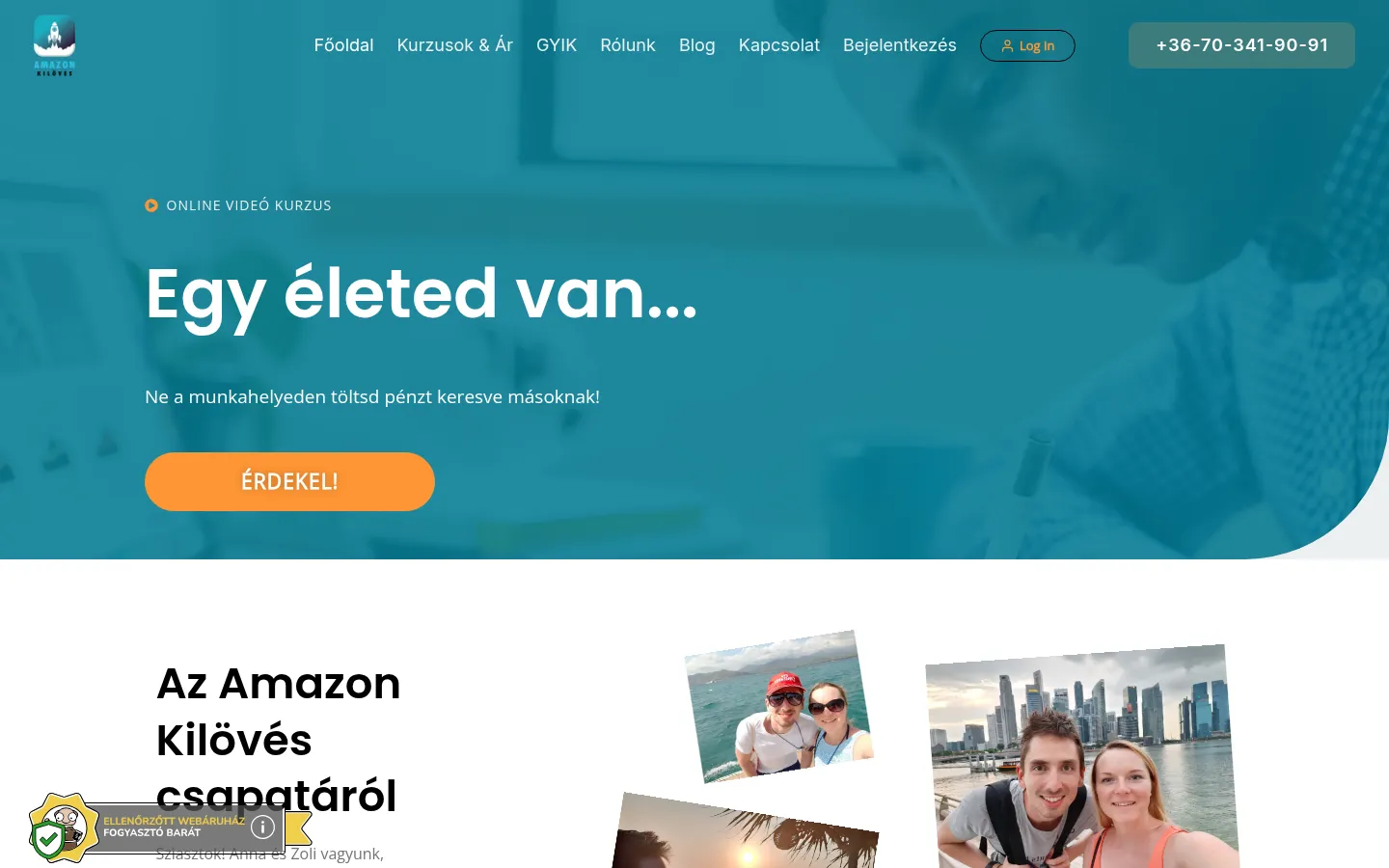
AmazonKiLoves.hu is a Hungarian online education and coaching business offering info products, online courses, and coaching programmes. Online education in a regional language market presents specific challenges: the audience size is defined by the language boundary, which means conversion rates matter more than traffic volume. A platform that converts well from a smaller but qualified audience is commercially more valuable than one attracting traffic it cannot convert. Every element of the platform needed to be architected for conversion rather than volume.
The core challenge of coaching website design in the Hungarian info-product market is the trust-conversion sequence. Hungarian online education buyers are sceptical of online course promises that do not deliver on educational value. The platform needed to communicate the genuine value of coaching programmes through social proof, outcome documentation, and curriculum transparency before asking for enrolment, while maintaining a conversion architecture that guided motivated buyers toward action at the appropriate moment in the discovery sequence.
The WordPress Gutenberg choice was both a technical and strategic decision. Building with Gutenberg's block editor as the primary content management system gave the AmazonKiLoves team the ability to build new course landing pages, blog content, and promotional pages using a consistent block library — without needing developer assistance for each new product launch. In a business model depending on frequent course launches and content publication, this editorial independence was a commercial prerequisite.
The Strategy
- Reusable Gutenberg block library — designed and built a comprehensive set of conversion-focused Gutenberg blocks — hero sections, testimonial displays, curriculum accordions, bonus stackers, countdown timers, and call-to-action patterns — that the team could assemble into new course landing pages without code
- Course funnel architecture — structured the end-to-end conversion path for each course product: awareness content identifying the problem, solution framing positioning the course as the answer, curriculum and outcome evidence justifying the investment, and a checkout experience removing final objections
- Lead generation system design — built email capture flows, lead magnet delivery mechanisms, and nurture sequence entry points throughout the platform, creating an email list growth architecture converting content readers into qualified course prospects before purchase
- Blog and content platform for organic authority — designed a content section with category structure appropriate for the Hungarian Amazon and ecommerce coaching topics AmazonKiLoves covered, building topical authority that drove organic discovery from the Hungarian market's search behaviour
- Performance-optimised Gutenberg implementation — configured the WordPress and Gutenberg setup for fast load performance appropriate for conversion-focused landing pages, where slow load times at the evaluation moment directly correlate with abandonment
- Hungarian market SEO architecture — built a Hungarian-language keyword architecture targeting online education, Amazon coaching, and ecommerce course searches the local market uses, with structured data for courses and educational content
The Results
Why this matters
Online education platforms in regional language markets succeed when conversion rate is treated as the primary growth lever rather than traffic volume. A Hungarian coaching business whose website converts 3% of visitors to enrolments is more commercially successful than one converting 1% of three times the traffic — and the conversion rate advantage is almost entirely a product of the funnel architecture and content quality of the platform rather than the traffic source. Online course website design that understands this builds for conversion from the page level up.
Info product website design must be built around the buyer's decision journey, not the seller's product catalogue. A prospective student considering an online course goes through a predictable sequence: they recognise a problem, evaluate whether this course addresses it, assess the evidence that it works, and decide whether the investment is justified. A platform whose page structure mirrors this sequence converts. One that presents features, price, and a buy button without that narrative context does not.
The Gutenberg block library was the investment multiplying every future course launch's commercial value. Once the block system was built, each new course landing page required no developer involvement — the team assembled the appropriate blocks, customised the content, and published. In a business model where time-to-launch directly affects revenue from course cohorts, eliminating the developer dependency from landing page creation was the architectural decision that delivered compounding returns beyond the initial platform build.
If you are building an online education website design in a regional language market, a coaching platform on WordPress Gutenberg, or any info-product business where conversion funnel architecture determines revenue more than traffic volume, AmazonKiLoves.hu demonstrates the block library, funnel design, and lead generation architecture that online education platforms require to grow in a defined market.