The Challenge
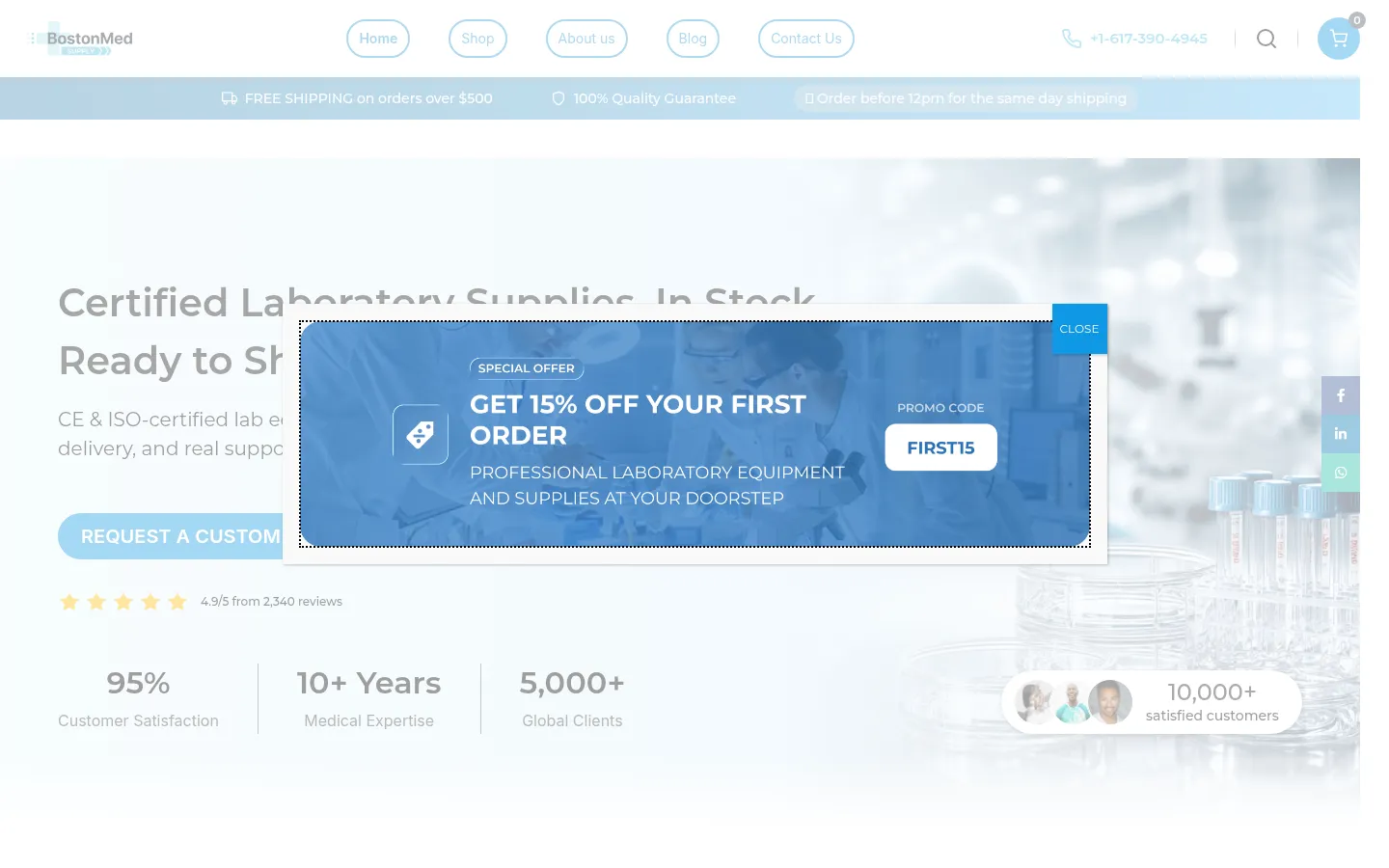
Boston Med Supply is a B2B medical and laboratory equipment supplier serving healthcare facilities, research laboratories, and clinical organisations across the United States. Medical procurement is a professional function conducted under specific institutional constraints: procurement officers and lab managers sourcing medical equipment operate within compliance frameworks requiring supplier qualification, product certification verification, and regulatory documentation review before any purchasing decision can be made. A B2B medical ecommerce platform not supporting this procurement workflow will not make it past supplier qualification regardless of competitive pricing.
The core challenge of B2B ecommerce website design for medical and laboratory supplies is the large-catalogue navigation problem. Boston Med Supply's product range spans medical consumables, laboratory instruments, diagnostic equipment, and research supplies — thousands of SKUs differentiated by specification parameters, compatibility requirements, regulatory classifications, and application suitability. A medical procurement officer sourcing replacement disposables for a specific diagnostic instrument needs to reach the correct product and confirm specification compatibility in a single efficient navigation sequence, not a multi-step browse through an undifferentiated catalogue.
The trust architecture problem was specific to the medical B2B context. Healthcare procurement teams operate under institutional risk management frameworks making supplier trust a formal evaluation criterion. FDA registration, ISO certification, CE marking, lot tracking capability, and quality management system documentation are not optional signals — they are disqualifying absences in a healthcare supplier evaluation. The redesign needed to surface this information at the structural level of the product and supplier pages rather than burying it in a section procurement officers had to hunt for.
The Strategy
- Product catalogue navigation redesign — restructured the category taxonomy around how medical buyers actually search: by clinical application first, then product type, then specification parameters — with multi-filter capability covering regulatory classification, certification requirement, and compatibility specification
- Medical product page clarity — developed a product page template surfacing the specification hierarchy appropriate for medical B2B evaluation: regulatory status and certification first, technical specifications second, compatible equipment third, ordering information fourth — matching the actual sequence of a procurement officer's workflow
- Trust signal architecture for healthcare procurement — integrated FDA registration references, ISO certification displays, CE marking documentation, lot traceability information, and quality management system references at the product and supplier profile levels, providing the regulatory evidence healthcare procurement teams need
- Large catalogue performance optimisation — addressed the page load and search performance challenges a large medical product catalogue creates at scale, implementing database query optimisation, product search indexing, and caching maintaining fast response times across thousands of SKUs
- B2B purchasing workflow support — built quote request functionality, purchase order management, and account-specific pricing features serving the institutional purchasing workflows of hospital procurement departments and laboratory supply managers
- Medical ecommerce SEO architecture — implemented structured data for medical and laboratory products, built category pages targeting specific medical supply and laboratory equipment searches healthcare procurement teams use, and developed a content strategy covering equipment selection guides and regulatory compliance resources
The Results
Why this matters
B2B medical ecommerce platforms not supporting healthcare procurement workflows are not competing for medical supply contracts — they are competing for the attention of procurement officers who will disqualify them during supplier evaluation before a purchase decision is reached. The procurement officer sourcing laboratory disposables for a hospital network has a professional obligation to verify supplier regulatory status, and a website making that verification difficult is a supplier not advancing past evaluation. Laboratory equipment website design must be built to the procurement standard the buyer is professionally required to apply.
Medical B2B ecommerce website design is ultimately a supplier qualification platform. Before healthcare procurement teams will order from a supplier, they need to verify regulatory compliance, certification status, and quality management standards. The website that makes this verification fast, complete, and unambiguous will advance through procurement evaluation at a rate that no amount of competitive pricing can compensate for in a platform making verification difficult.
The trust signal architecture was the decision most directly affecting the platform's ability to advance through institutional procurement evaluation. In healthcare supply, regulatory documentation is not a differentiator — it is a threshold. A supplier without visible FDA registration or ISO certification documentation will be eliminated from a hospital procurement evaluation regardless of their actual certification status. Making these credentials immediately visible and verifiable at the product level was the change moving the platform from "possible supplier" to "qualified supplier" in institutional procurement workflows.
If you are building a medical ecommerce website design for a B2B healthcare supplier, a laboratory equipment platform, or any medical supply business that needs to pass institutional procurement evaluation, Boston Med Supply demonstrates the regulatory trust architecture, catalogue navigation, and procurement workflow support that B2B medical ecommerce requires.