The Challenge
Xometry EU is a European industrial manufacturing platform connecting buyers needing precision custom parts with a network of qualified manufacturing suppliers. The procurement managers and engineers who use the platform to source CNC machined components, sheet metal fabrications, and injection-moulded parts are technical buyers with specific, non-negotiable requirements for material specifications, tolerances, certifications, and lead times.
The challenge of manufacturing website design for an industrial marketplace is the credibility-complexity balance. B2B industrial buyers need to verify capabilities — ISO certifications, material handling, tolerance ranges, inspection processes — before they will submit a sourcing request. But the platform must present this information in a way that serves a procurement manager's workflow rather than requiring them to hunt through technical documentation to confirm basic qualification criteria.
The supplier portal dimension added further architectural complexity. Xometry EU's manufacturing partners needed their own authenticated environment for receiving enquiries, managing capacity, uploading certifications, and communicating with buyers — a genuinely separate user experience within the same platform, with its own UX requirements and content management needs that differed completely from the buyer-facing catalogue.
The Strategy
- Industrial WordPress marketplace architecture — built a platform structure that serves both buyer-facing product discovery and supplier-facing capacity management within a unified WordPress environment, with appropriate access control and content separation between both user groups
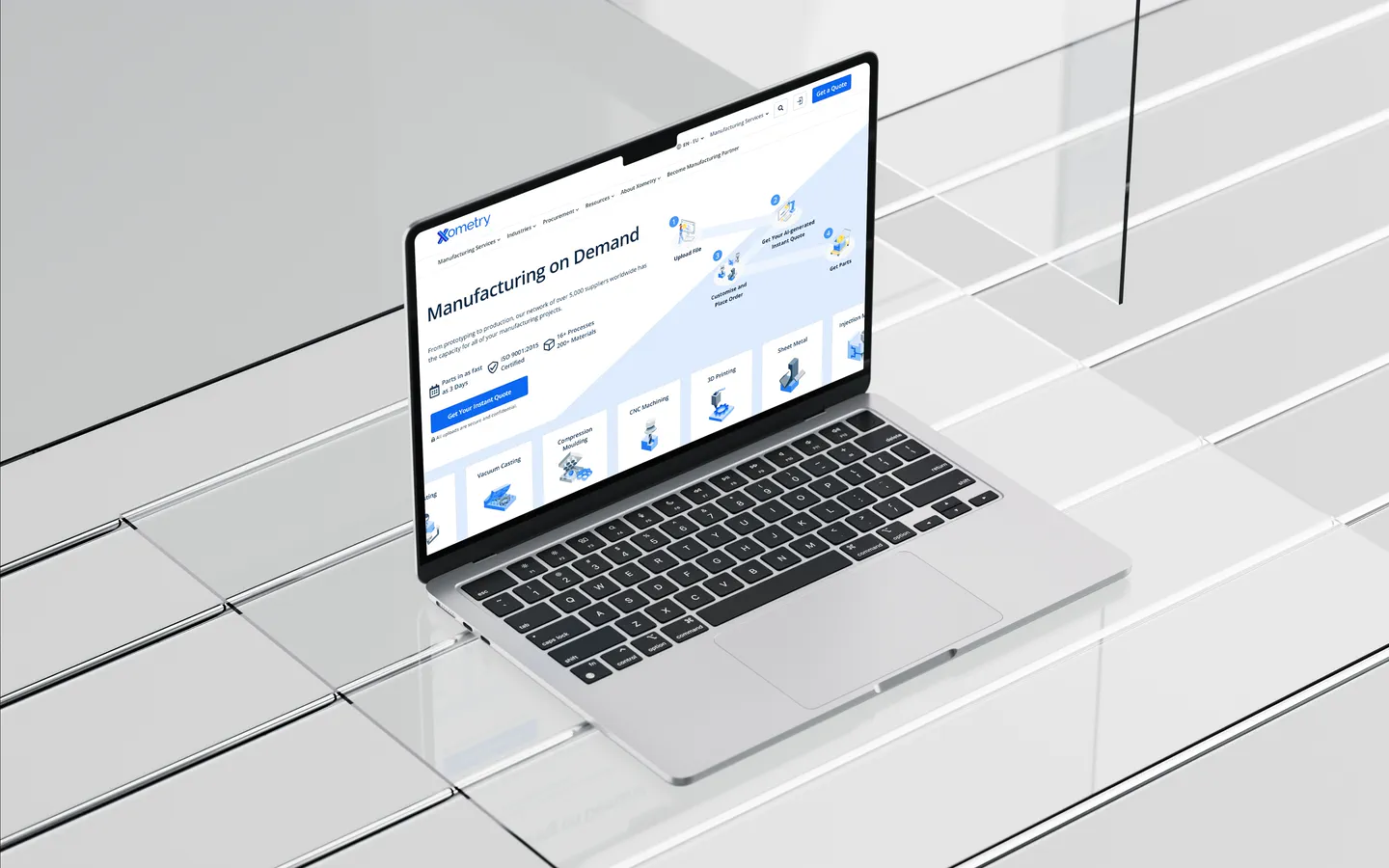
- Custom parts catalogue UX — designed a specification-first product catalogue allowing buyers to filter by manufacturing process (CNC machining, sheet metal, injection moulding), material, tolerance class, certification requirement, and lead time — matching the actual specification process engineers follow when sourcing custom parts
- Supplier credibility architecture — built supplier profile pages carrying certification documentation, manufacturing capability statements, equipment lists, and production volume capacity data, giving procurement managers the qualification information they need without requiring a separate due diligence process
- Supplier portal design — designed an authenticated partner environment for manufacturing suppliers to manage their capability profiles, receive and respond to sourcing enquiries, update capacity status, and upload current certification documentation with appropriate review workflows
- Engineering-grade B2B UX — developed a design language that communicated industrial precision: structured layouts, technical typography, process diagrams, and the specific visual discipline that B2B industrial buyers associate with credible manufacturing platforms
- Manufacturing SEO architecture — built keyword-targeted landing pages for each manufacturing process and material category, implemented structured data for industrial services and supplier listings, and developed a content strategy covering manufacturing processes, material selection guides, and engineering resources
The Results
Why this matters
Industrial manufacturing procurement is a zero-defect environment. A buyer sourcing a precision component for an aerospace assembly has no tolerance for supplier uncertainty — if a platform does not clearly communicate a supplier's certifications, material handling capabilities, and tolerance ranges, that buyer will not request a quote. Engineering company website design for manufacturing platforms must be built to the same precision standard as the products the platform helps source.
B2B industrial website design requires understanding that procurement managers are not browsing — they are qualifying. Every element of the platform, from the supplier certification display to the parts catalogue filtering, must answer the qualification questions that determine whether a sourcing request is submitted. Generic marketplace design in a precision engineering context is a competitive disqualifier.
The supplier portal was architecturally the most complex element of the build. Two-sided industrial marketplaces are significantly harder to build well than consumer marketplaces because both sides of the market have professional-grade requirements. A manufacturing supplier's authenticated environment must handle certification document management, production capacity updates, and structured RFQ responses — not a simple message inbox. Building this correctly required treating the supplier portal as a separate product within the platform.
If you are building a manufacturing website design for an industrial marketplace, a CNC services platform, or any B2B engineering company, Xometry EU demonstrates the architecture and UX discipline that serious industrial buyers require before they will trust a digital platform with their supply chain.