The Challenge
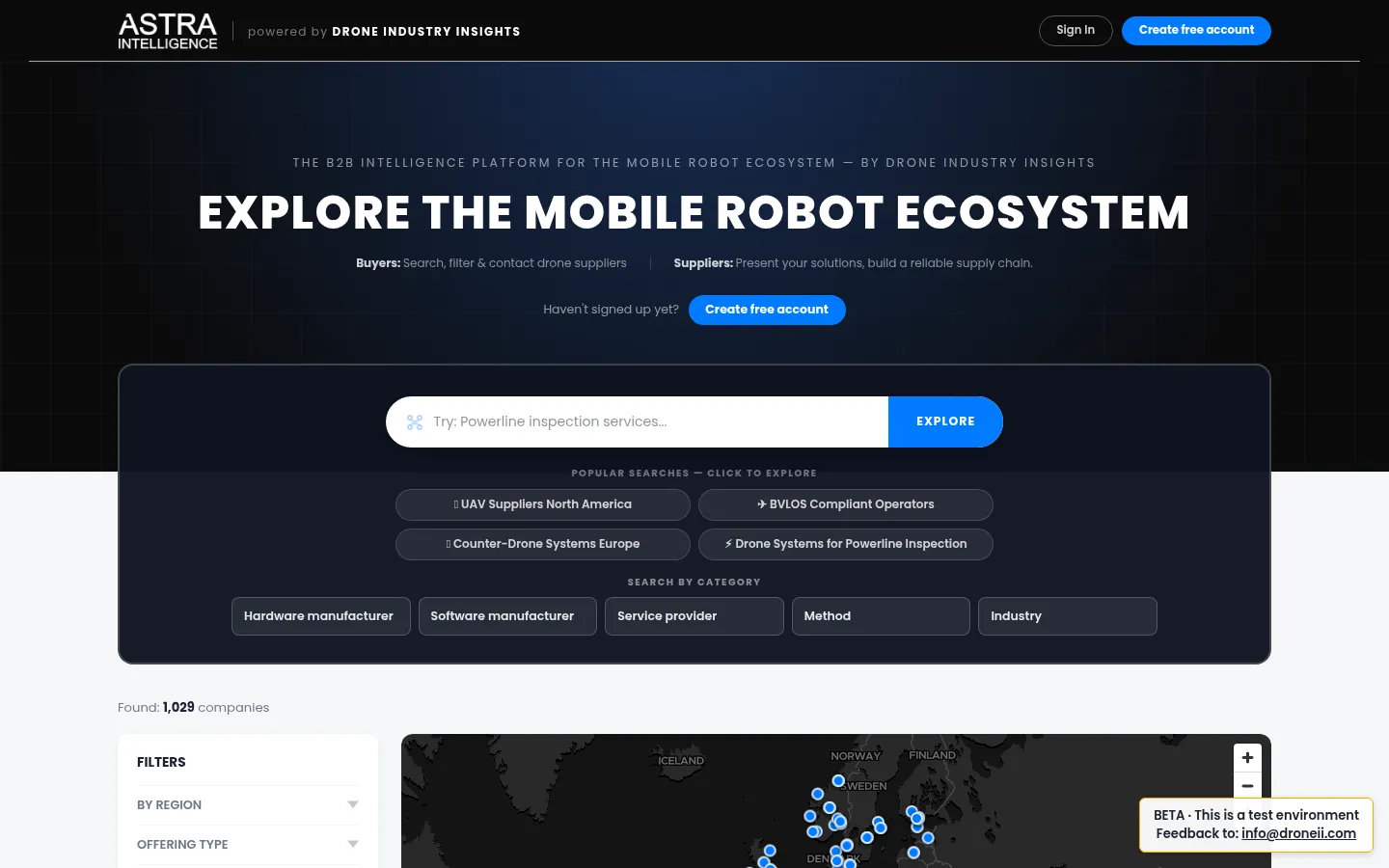
Astra is a specialised drone parts and accessories marketplace operating under the DroneII brand — a global drone industry intelligence platform. The commercial proposition was to give commercial drone operators, hobbyists, and enterprise UAV users a single, well-organised source for the components, batteries, propellers, controllers, and accessories that keep their drone fleet operational and performing. The challenge was that drone parts buying is a technically specific activity: the wrong battery chemistry, the wrong propeller pitch, or an incompatible controller protocol can ground expensive equipment or, in worst cases, damage it.
The core challenge of drone ecommerce website design is compatibility as a purchase prerequisite. Unlike most consumer ecommerce where product selection is aesthetic and preference-driven, drone parts purchasing has a binary compatibility dimension: a part either works with a specific drone model or it does not. A marketplace that cannot answer this question — through filtering, specification display, or compatibility documentation — forces the buyer to research compatibility externally, and external research creates the exit event from which most buyers do not return.
The dual audience of commercial and consumer drone operators created a UX challenge. Enterprise operators sourcing replacement parts for a fleet of commercial inspection drones have different purchasing workflows from a hobbyist upgrading their racing drone build: different price sensitivity, different volume considerations, different technical terminology, and different decision criteria. The marketplace needed to serve both without creating a confused middle-ground experience that served neither well.
The Strategy
- Drone model compatibility filtering — built a product discovery system that allowed buyers to filter the entire catalogue by drone manufacturer and model, surfacing only confirmed compatible parts and accessories for their specific aircraft, eliminating the compatibility research burden from the purchase journey
- Detailed specification and compatibility documentation — developed product page templates that displayed technical specifications, compatibility matrices, and installation requirements in a structured, engineer-readable format, with user review integration covering real-world performance observations specific to particular drone model pairings
- Intuitive category architecture — designed a taxonomy covering drone components, accessories, and consumables with the sub-categorisation that operators actually use: by battery chemistry, by propulsion system compatibility, by communication protocol, and by application type (racing, photography, commercial inspection)
- B2B marketplace features for enterprise operators — implemented volume pricing display, bulk order enquiry flows, and fleet management part-list functionality that served the operational purchasing workflows of commercial drone operators without creating friction for consumer buyers who needed none of those features
- Visual product presentation for technical buyers — designed product imagery standards and diagram integration that showed mounting dimensions, connector specifications, and installation context — the visual information that reduces pre-purchase enquiries from technical buyers who need to confirm fit before ordering
- Drone industry SEO architecture — implemented structured data for drone product listings, built category and compatibility landing pages targeting the specific drone model + component searches that operators use when sourcing parts, and optimised the platform for the DroneII brand authority that the parent platform had already established
The Results
Why this matters
Drone parts marketplaces that do not solve the compatibility problem at the platform level are not building a marketplace — they are building a parts directory that pushes the hardest part of the purchase decision onto the buyer. Commercial drone operators who need to keep their fleet operational cannot afford the time that external compatibility research requires. A technology marketplace website that makes compatibility confirmation instant earns the repeat purchasing behaviour that makes marketplace businesses commercially viable.
Drone ecommerce website design must be built around the specific buying behaviour of technically informed operators who have been burned by incompatible parts before. Every purchase in this category is a trust decision — trust that the compatibility information is accurate, trust that the specification data is complete, and trust that the marketplace stands behind the information it provides. The platform that earns that trust earns the repeat order.
The dual-audience architecture — commercial fleet operators and consumer hobbyists sharing a single marketplace — was handled through progressive feature disclosure rather than separate interfaces. Consumer buyers saw a clean, straightforward product discovery experience. Commercial buyers who indicated volume purchasing intent were surfaced the additional features — bulk pricing, fleet part-lists, account management — that served their operational needs without cluttering the experience for buyers who didn't need them. This approach served both audiences at their level of need without the complexity of maintaining two separate platforms.
If you are building a drone ecommerce website design, a technology parts marketplace, or any B2B product catalogue where compatibility is the primary purchase prerequisite, Astra DroneII demonstrates the compatibility filtering and specification architecture that technical product marketplaces need to serve buyers who cannot afford to get it wrong.