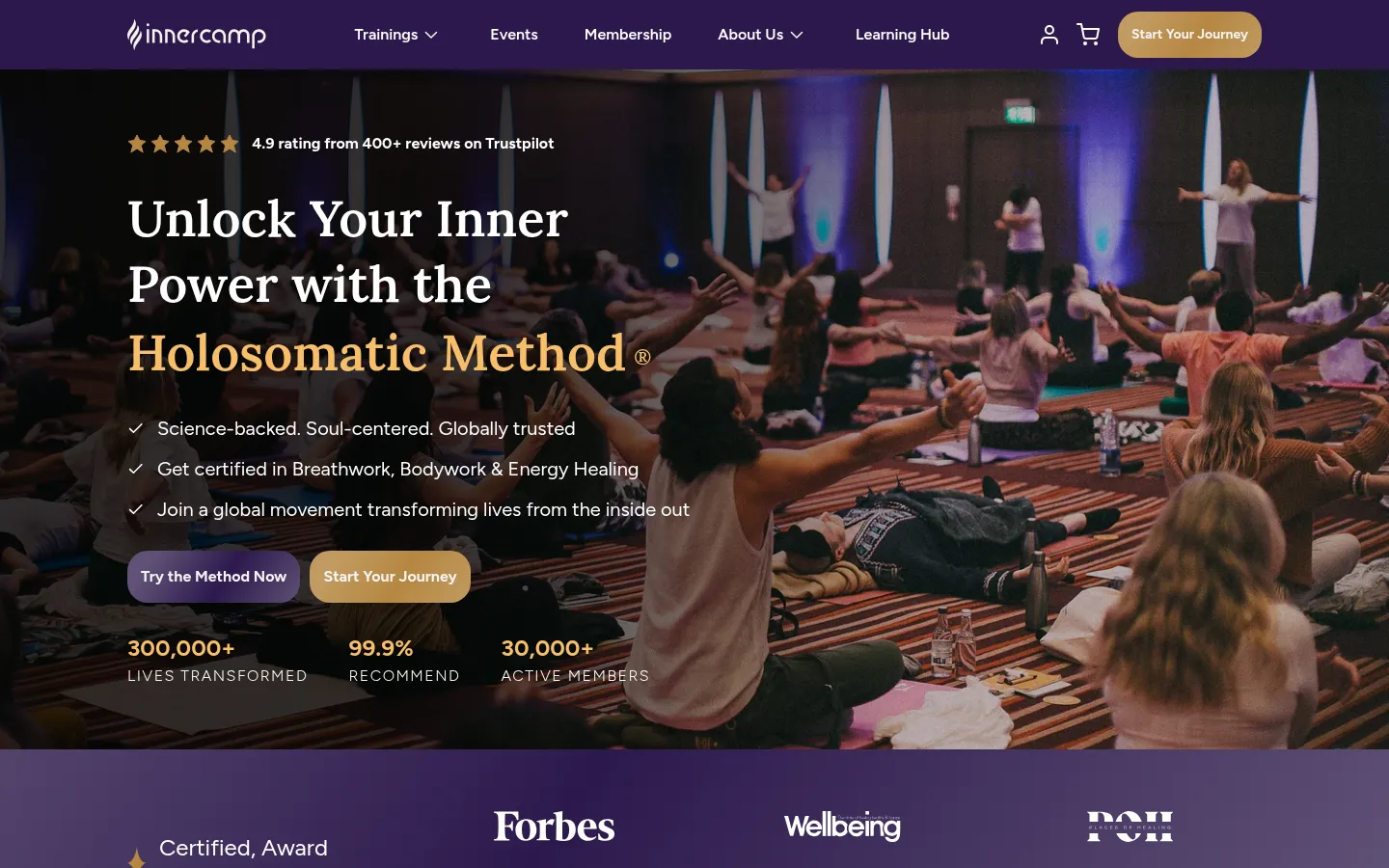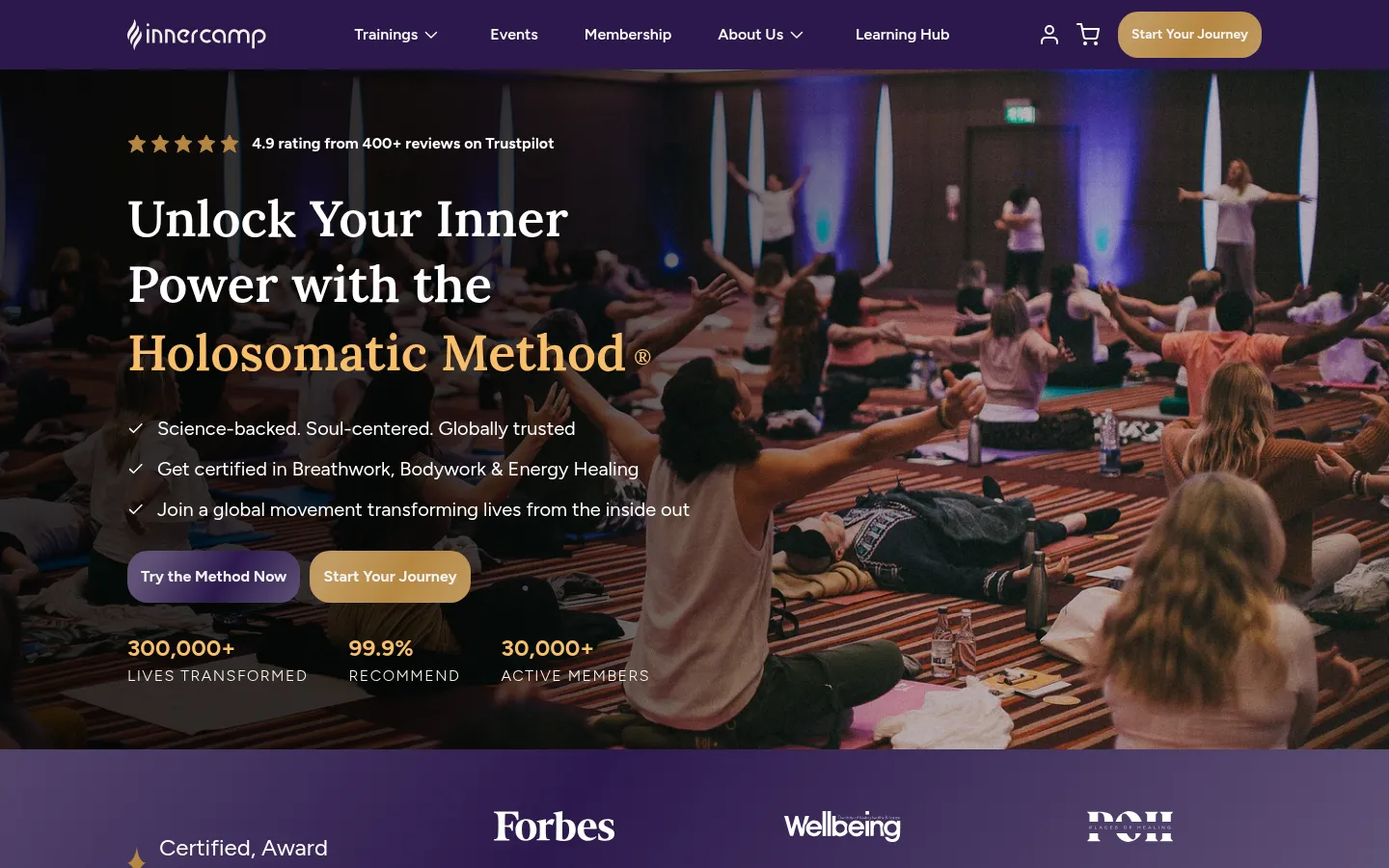
The Challenge
InnerCamp's yoga, breathwork, and healing training programmes represent a specific category of online education: transformation-oriented courses where the quality of the practice is genuinely difficult to communicate through conventional web copy. A student considering a ten-day breathwork facilitator training programme is not evaluating a product specification — they are asking whether they trust this platform to guide a genuinely significant personal journey.
The core challenge of yoga ecommerce website design for a training platform is the trust-before-transaction requirement. Unlike standard ecommerce where a well-photographed product page and competitive price can drive purchase, a healing and practitioner training platform must first establish deep credibility — the depth of the teaching, the track record of the practice, the quality of the community — before a visitor considers the commercial investment. The design must do this work before any sales content appears.
The WooCommerce architecture needed to handle a genuinely complex product mix: single-session workshops, multi-week online courses, in-person retreat registrations, practitioner certification programmes, and digital resource downloads — each with different purchase flows, access models, and post-purchase delivery mechanisms. Unifying this within a single coherent WooCommerce environment required careful planning of product types, access control, and customer account architecture.
The Strategy
- Immersive visual design language — developed a brand aesthetic that expressed the depth and authenticity of InnerCamp's healing practice: earthy palette, breathing-space typography, full-bleed nature photography, and a page pacing that allowed the design itself to communicate the quality of the experience before a word was read
- WooCommerce multi-product-type architecture — configured WooCommerce to handle workshops, multi-week online courses, retreat registrations, certification programmes, and digital downloads within a unified catalogue, with appropriate access control and content delivery for each product type
- Course discovery and learning journey UX — designed the course catalogue with progression logic: beginner wellness practices leading naturally to facilitator foundations, facilitator foundations leading to certification programmes, creating a clear student development path that extends lifetime value
- Community and social proof integration — embedded student testimonial video content, practitioner outcome stories, and community gallery elements at the key trust-building positions in the page flow, providing the third-party validation that healing platform buyers require before committing
- Repeat visit content architecture — built a blog, resource library, and free practice content section that gives the InnerCamp audience reasons to return between purchases and deepens the relationship between the platform and its community between course cohorts
- Global platform performance — optimised load times and CDN delivery for InnerCamp's internationally distributed student base, ensuring consistent fast performance for students accessing the platform from Europe, North America, Asia, and Australia
The Results
Why this matters
Healing and yoga platforms occupy a unique commercial position: the product is personal transformation, and the website must make a visitor feel that possibility before they see a price. Online wellness platform design that leads with commercial messaging — course prices, enrolment buttons, promotional offers — before establishing the depth of the teaching misunderstands the psychology of its audience entirely. The design sequence matters as much as the design quality.
Yoga and healing ecommerce website design must be built around one question: does this platform feel worthy of the trust a student is being asked to place in it? A student considering a breathwork facilitator training is investing months of their life and thousands of pounds in a practice. The website is the first evidence that investment will be honoured. Every design decision must meet that standard.
The course progression architecture was the most commercially significant structural decision. A yoga and healing platform whose students progress naturally from introductory practices to facilitator training to certification programmes generates exponentially more revenue per student than one that treats every course as a standalone purchase event. Building the progression logic into the catalogue design — rather than leaving it to the student to discover — is the design decision that transforms a course catalogue into a genuine learning journey.
If you are building a yoga ecommerce website design, a holistic health training platform, or any online wellness education business where transformation is the product, InnerCamp demonstrates the design philosophy and WooCommerce architecture that earns the trust this category of student brings to their first visit.