The Challenge
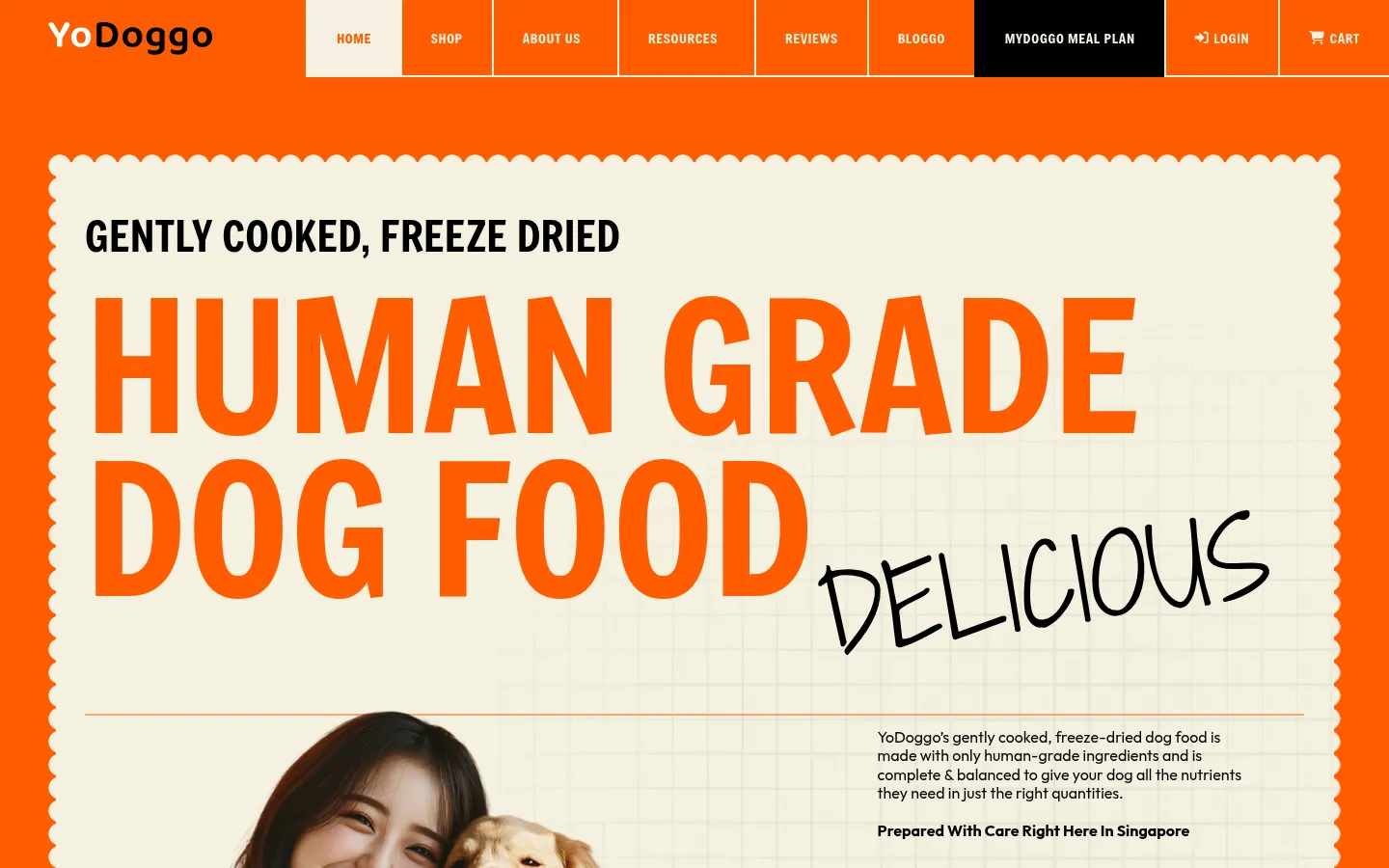
Yodoggo is a pet products brand serving dog owners with accessories, nutrition, training tools, and wellness products. The pet products market is highly competitive and emotionally driven: purchasing decisions are made not on rational product specifications alone, but on trust that the brand genuinely understands and cares about dogs as much as their owners do. A generic ecommerce template fails this category entirely.
The core challenge of pet products ecommerce website design is brand authenticity. Dog owners are a discerning audience — they read ingredient lists, they research materials, they care about sourcing. A website that doesn't reflect genuine product knowledge and genuine affection for dogs loses that audience's trust the moment they detect the gap between marketing language and product reality. The design had to communicate real brand values, not a generic pet store aesthetic.
The product catalogue architecture presented a specific UX challenge: Yodoggo's range spans multiple product categories — accessories, nutrition, training, and wellness — each with meaningful size and breed-specific variations. A customer shopping for a Large Breed harness has a completely different discovery journey than one looking for a puppy supplement. Both journeys needed to be intuitive without requiring prior product knowledge from the shopper.
The Strategy
- Brand-forward WordPress design — developed a visual system that expressed Yodoggo's personality: warm, energetic, and genuinely dog-obsessed, using photography direction, colour palette, and copywriting tone that resonated with dog owners' emotional relationship with their animals
- WooCommerce product taxonomy by dog profile — restructured the catalogue around dog-owner search behaviour: by dog size, age, breed type, and need (training, nutrition, wellness, accessories), making product discovery intuitive for owners who know their dog but not necessarily the product range
- Mobile-first ecommerce UX — designed the browse, wishlist, cart, and checkout flow for one-handed smartphone completion, with swipeable product galleries, size guide overlays, and a streamlined checkout that doesn't lose the dog-owner who is simultaneously managing a walk
- Product page design optimised for pet purchase psychology — integrated user-generated content (owner photos, video reviews), breed-specific usage guidance, and ingredient/material transparency at the product level, addressing the specific concerns of informed pet owners before they become objections
- Loyalty and repeat purchase architecture — designed the post-purchase experience to encourage return visits: subscription options for consumable products, wishlist for future purchases, and breed-specific product recommendations that deepen the relationship between the brand and individual customers
- Performance and SEO optimisation — implemented structured data for pet product listings, optimised category pages for breed-specific and product-type searches, and ensured fast load times across the image-heavy product catalogue
The Results
Why this matters
Pet ecommerce brands that succeed long-term are not simply selling products — they are building communities of people who share a genuine commitment to their animals. A dog products online store that understands this builds every feature of the platform to deepen that community relationship rather than simply optimise for single-transaction conversion. WooCommerce is a capable platform for this when configured correctly — the architecture decisions are what determine whether it serves the brand's long-term commercial model or merely processes orders.
Pet products ecommerce website design must reflect the emotional reality of pet ownership. Dog owners do not shop for their animals the way they shop for household supplies — they are making choices they feel reflect their values as a caregiver. A platform that treats pet products as commodities, rather than expressions of care, will not retain the audience it works hard to acquire.
The breed and size-based catalogue architecture was the most commercially important structural decision on the project. In pet ecommerce, the biggest cause of abandoned sessions is not pricing or shipping — it is uncertainty about product fit. A customer who cannot quickly confirm that a harness fits their specific dog's weight range, or that a supplement is appropriate for their breed's health profile, will leave rather than risk a mistake. Removing that uncertainty at the catalogue level directly reduces abandonment.
If you are building a pet products ecommerce website, a dog brand online store, or any consumer ecommerce platform in an emotionally driven category, Yodoggo demonstrates what brand-authentic, architecturally thoughtful design delivers over generic ecommerce templates.