The Challenge
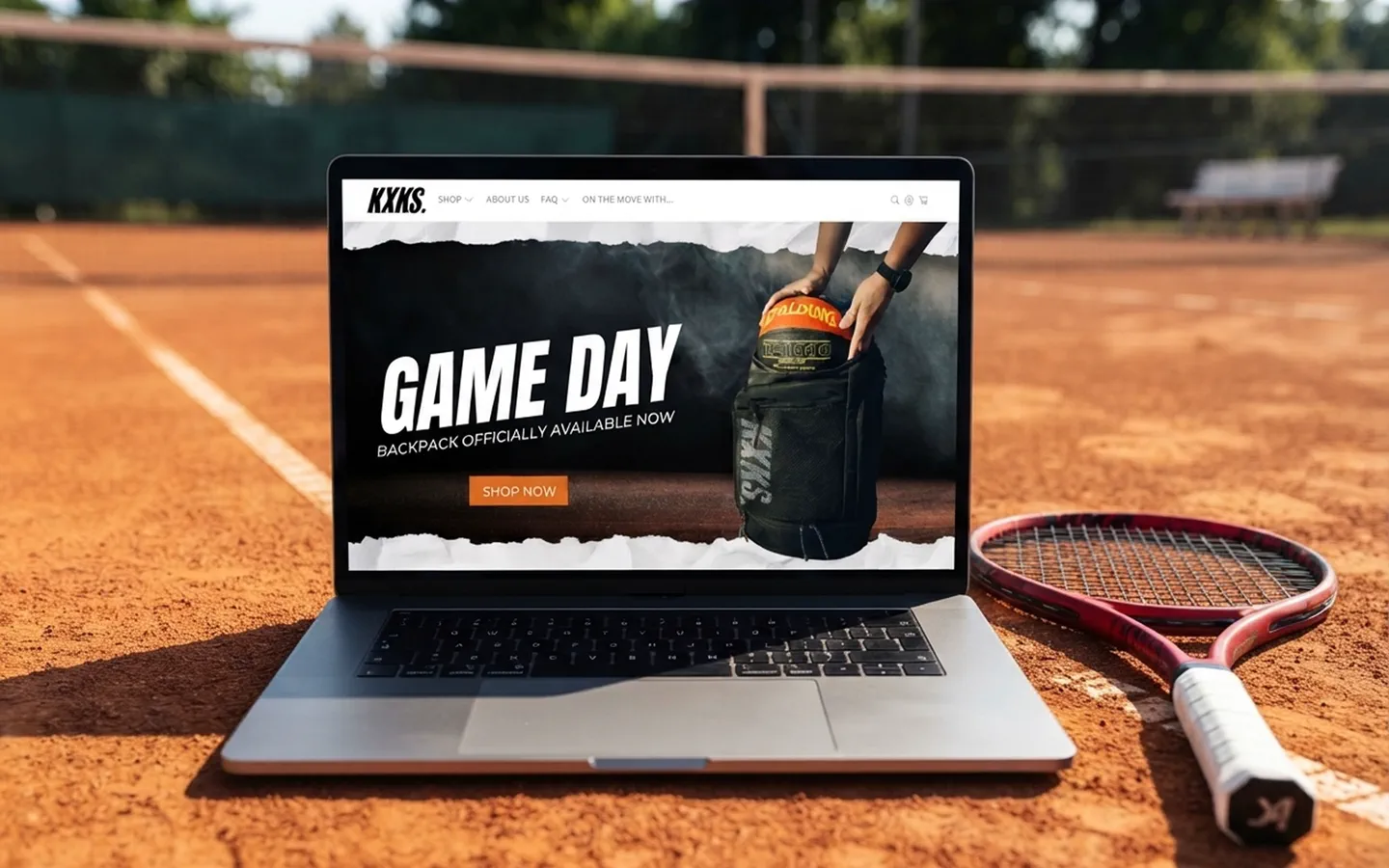
KXKS Australia produces sports apparel, travel gear, and streetwear for an active Australian consumer base — a category sitting at the intersection of athletic performance, travel functionality, and street-culture aesthetics. Products in this category carry complex functional specifications: fabric technology, packability ratings, waterproof ratings, activity suitability, and size guides that vary between product lines. Communicating all of this effectively without slowing the shopping experience requires product page design that presents the right information at the right moment.
The core challenge of athletic apparel website design is the speed-depth tension. Sports apparel buyers are decisive: they arrive with a clear activity context, evaluate a product quickly against their performance requirements, and move to purchase or move on. A product page requiring extensive scrolling to find technical specifications, or that presents feature information in a sequence forcing the buyer to read rather than scan, loses athletic buyers at the evaluation step.
The brand identity challenge was distinctive for KXKS's market positioning. The brand occupies a specific cultural space — athletic performance with street aesthetic credibility — that most Australian sports brands do not successfully navigate. Too much performance messaging loses the street culture audience; too much aesthetic focus loses genuine athletes. The interface needed to hold both dimensions simultaneously through design choices rather than explicit positioning statements.
The Strategy
- Product page restructuring around key selling points — redesigned the product page template to surface the three to five attributes most relevant to purchase decisions — activity suitability, fabric technology, packability, water resistance — as primary visual elements rather than buried specification entries
- Collection and category navigation simplification — redesigned the navigation hierarchy across KXKS's range with clear collection entry points and consistent filtering by activity, gender, and size, reducing the navigation steps required to reach relevant products
- Technical feature communication design — developed an iconographic feature system conveying functional attributes — waterproof rating, breathability, packability — at a glance alongside product imagery, giving buyers performance confirmation without requiring them to read extended specification copy
- Size guide integration — built an accessible, activity-specific size guide directly into the product page rather than as an external link, reducing the size selection uncertainty that drives cart abandonment in apparel ecommerce
- Athletic brand visual identity — developed an interface language expressing KXKS's dual positioning: performance photography direction that communicated athletic credibility alongside street-culture visual references maintaining cultural relevance beyond pure performance
- Conversion-optimised product CTAs — redesigned the add-to-cart flow for clarity appropriate to the athletic buyer decision cycle: prominent variant selection, clear stock availability, and streamlined checkout entry points removing friction at the purchase moment
The Results
Why this matters
Sports apparel ecommerce interfaces that do not resolve the speed-depth tension lose athletic buyers at the product evaluation stage — a stage that is both the highest-intent moment in the journey and the most time-sensitive. An athletic buyer who cannot confirm performance specifications and size within thirty seconds will not wait for a slower interface. Fitness brand website design must be engineered for the speed at which athletic buyers actually make decisions.
Athletic apparel ecommerce website design must understand that sports buyers are evaluating a product against a specific activity context they already have in mind. They are confirming that a product meets a functional requirement before making a confident purchase. The design that makes that confirmation fast and unambiguous will convert at a higher rate than one that makes it accurate but slow.
The iconographic feature communication system was the individual design decision that most directly reduced speed-depth friction. Replacing text-based feature lists with a consistent icon vocabulary for key product attributes — activity suitability, fabric rating, packability, waterproofing — gave athletic buyers the performance confirmation they needed in the time it takes to read two words rather than two paragraphs. In apparel ecommerce, the time between feature confirmation and cart addition is where athletic buyers are most likely to abandon, and reducing that time is a direct conversion uplift.
If you are designing a sports ecommerce website design for an athletic apparel brand, a travel gear retailer, or a streetwear ecommerce platform that needs to communicate product functionality clearly at athletic buyer decision speed, KXKS Australia demonstrates the product clarity UX that performance apparel interfaces require.