Understanding the ins and outs of website growth, we help ensure that your site grows over time with ever-increasing reach and accessibility. Not only do we employ the latest digital marketing techniques for driving traffic directly to your website, but our strategies also focus on gaining loyalty from those visitors so they come back again and again.
Leave your contacts to get a comprehensive and aggressive digital marketing plan taking your business to new heights.
SEO Content Writing: Tatiana Kulish on Google and LLMs
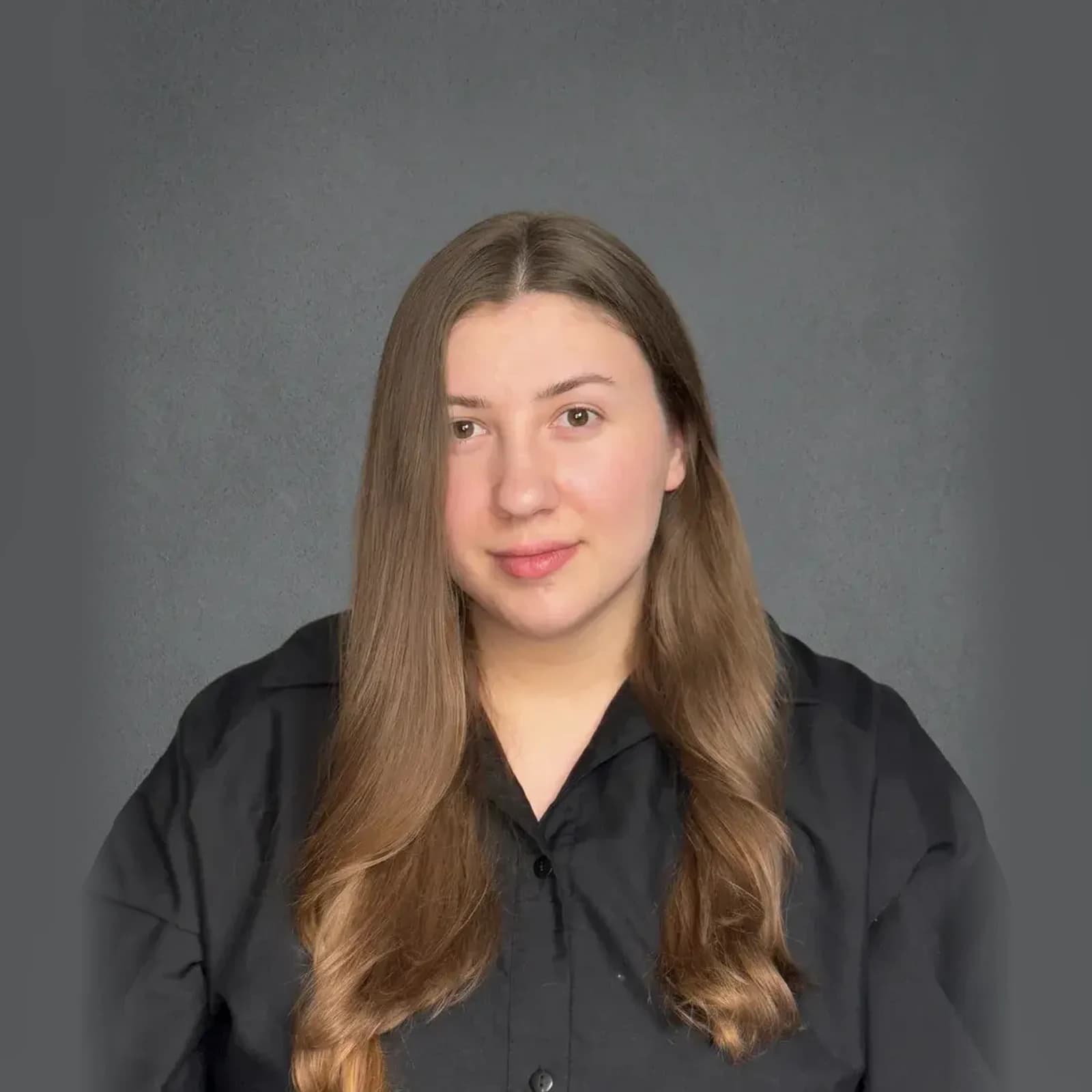
Tatiana Kulish started at Mettevo as a copywriter in 2022 and moved into proofreading two years later. Today she is the last person to read a text before it goes to a client. She trained as a translator (English and French) at Taras Shevchenko National University of Kyiv and works in Ukrainian, English, and French.
I’m Oleg Silin, co-founder of Mettevo. Search has changed a lot since Tatiana joined us: in May 2026, Google said AI Mode had passed one billion monthly active users. These days, a page has to rank, and it also has to be clear enough for an AI answer to quote. I wanted to know how an editor with a translator’s training looks at that, and what she actually does with a text before she lets it go.
Key takeaways
Tatiana edits SEO texts the way she was taught to translate: each concept keeps one name, the register fits the reader, and no claim goes further than its source.
She doesn’t write one version for Google and another for AI. She writes one page and holds it to the stricter standard.
She reads every text twice: once to understand the whole, once to edit.
AI has made ideas cheap, so the value is in what a model can’t know: the client’s real experience and an editor’s judgment.
The problems she finds most often in AI-assisted drafts are unsourced numbers, product names that drift, and openings that could belong to any company.
Her advice for 2027 has little to do with tools. It’s about reading sources closely, hearing tone, and being able to edit someone else’s draft.
How did translation training shape her editorial standards?
Oleg: Let’s start at the beginning. Do you remember your first text for us?
Very well. It was a Valentine’s Day gift list for Rosaholics. I think I was lucky: most test tasks are dry product descriptions, and this one actually let me play. I tried to come up with ideas that weren’t on every other “top 10 gifts” list, and apparently that’s what got me the job.
What’s funny is that years later, I still enjoy writing for that site. I could easily hand those texts to someone else, but sometimes I take them myself. It’s a bit like visiting the place where everything started.
Oleg: You came to copywriting from translation. What did you bring with you?
Mostly a feeling of responsibility toward the source. At university we were taught that a translator has no right to “improve” the original. If the author wrote “may,” you don’t turn it into “must” just because it sounds stronger. I work with SEO texts the same way. If a study says “in some cases,” the article can’t say “always.”
The second thing is terminology. When you translate a contract or a medical leaflet, you find the one correct term and stick with it to the end. If a reader sees “agreement” in one paragraph and “contract” in the next, they start to wonder whether these are two different documents. It works the same way in an article. If a product is called a “platform” in the first paragraph, it shouldn’t turn into a “service” and then a “solution” by the third.
Oleg: But a translation can be accurate and still be boring. How do you keep an SEO text from reading like an instruction manual?
I ask myself what this fact lets the reader decide. “The warehouse is 12,000 square meters” doesn’t mean much on its own. “The warehouse is big enough that we don’t send your order to a partner during peak season” is something a client can actually use. The story is almost always already in the brief. You just have to find the one detail only this client can honestly say about themselves.
Why does so much SEO content read like a bad translation?
Oleg: You often say that weak SEO text reads like a bad translation. What do you mean?
The symptoms are the same. When I proofread, I see four of them all the time.
Claims without a source. “Studies show” with no study anywhere in sight. Either I find the source and put its name and date right in that sentence, or the claim goes.
Empty connectors. “Moreover,” “in addition,” “it is worth noting.” They glue sentences together without saying how they’re related. I replace them with the real connection: because, so, but, unless.
No specifics. If a sentence could be moved to a competitor’s site unchanged, it says nothing about this business. I look for a number, a name, or a condition that belongs to this client and no one else.
Tone that breaks halfway down. The first half of the page is written in one voice, the second in another, usually where a second author or a tool took over. The fix is simple: read the whole text aloud in one go. The seams are easy to hear.
None of these can be caught with a keyword report. Every one is a decision about a specific sentence, and a person has to make it.
What changes when a language model reads the page too?
Oleg: Google says pages don’t need any special optimization to appear in AI Overviews. Do you believe that?
I do. Google’s documentation on AI features is clear: there’s no special markup, separate schema, or any secret checklist for AI Overviews or AI Mode. The page has to be indexed and follow the usual SEO practices, and that’s it.
But “no special optimization” doesn’t mean the requirements for the text stayed the same. They changed a lot, and not just on the technical side.
Oleg: What changed, then?
A few years ago you could get away with a long, flowing article. An intro about how important the topic is, a few paragraphs that slowly circle the answer, the key fact hidden somewhere in the middle. A patient reader would find it, and Google would still rank the page.
That doesn’t work anymore. Now the information has to be as structured as possible: the answer comes first, every section covers one question, steps are numbered, comparisons go into a table, and every number sits next to its source. It’s not about pleasing an algorithm. A structured text is simply easier to read. A potential client finds what they came for in seconds, and an AI system can pull out a clear paragraph and carry it into its answer without losing the meaning.
So I don’t write one version for people and another for bots. I write one page that works for both, and structure is what makes that possible.
Oleg: What does that look like in practice?
Here’s how I’d sum up the shift:
What
What used to matter
What matters now
Evidence
Repeating the keyword
A claim with a named source and a date
Unit of text
The whole page
A paragraph that makes sense on its own
Sentence
Smooth transitions
One clear thought that can be quoted
Format
Headings as labels
Answer first, steps numbered, comparisons in a table
I’d argue hardest for the second row. If a paragraph begins with “That’s why it matters,” it can’t be quoted on its own, because nobody knows what “it” is. A pronoun with nothing behind it worries me more than a keyword that appears one time too few. Google doesn’t require any of this in writing, but it makes a page easy for a client to read and easy for AI to quote.
What does she check before approving an SEO article?
Oleg: You’re the last person to see a text before the client does. How do you read it?
Always twice. The first time, I read it from start to finish without making any changes. I need to understand what the text is trying to say as a whole. If something looks questionable, I leave a comment and keep going. If you start correcting commas in the first paragraph, you can miss that the whole third section argues the opposite of the first.
The second reading is slow. That’s when I actually edit: I go back to my comments, check the facts, and change whatever doesn’t work. I do use a few tools along the way, but I’ll keep those to myself. Every editor needs a few secrets.
Oleg: And what’s on your checklist?
Seven points. I go through them every time, even when I’m in a hurry:
The first paragraph answers the question in the headline and makes sense without the rest of the article.
Every number has a source and a date, and no sentence is stronger than its source.
One concept, one name. I search the text for synonyms of the main term and keep only one.
Any paragraph can be lifted out of the text and still be understood. If there’s a “this” or “it” with no noun behind it, I add the noun.
The tone fits the reader and the brand. A dental clinic and a SaaS product don’t speak the same way.
The technical basics match the brief: title, headings, internal links, meta description.
A real person stands behind the text, with credentials when the topic calls for them.
Oleg: Why the author?
Because a page nobody answers for is usually a page nobody checked; Google says the same thing in its guidance on people-first content: it recommends clear authorship and asks whether the content goes beyond the obvious. I’d ask that question even if Google didn’t.
How does the team keep each client’s voice distinct?
Oleg: We have clients in medicine, fintech, and SaaS. How do you keep them from sounding the same?
First, I don’t describe a voice with adjectives. “Friendly and professional” fits every company in the world. What I need are decisions. How formal are we? How technical? What does the client call their own product? Which words do they never use? All of that has to be in the brief before anyone writes the first sentence.
Then I think about the reader. Someone on a clinic’s website might be anxious, so the terms are exact, the sentences are simple, and there are no promises the clinic can’t keep. A SaaS buyer is comparing three tools at once, so you can be quicker and more technical with them. It can be the same writer, just with two different registers.
Oleg: Is there a quick way to check?
Take a sentence from one client’s page and put it on another client’s page. If it still fits, it was never written in anyone’s voice. And one more thing: a model can only imitate a voice that someone has already written down as clear rules.
Which mistakes does she flag most often in AI-generated drafts?
Oleg: Has AI made your job easier or harder?
Both, and I won’t pretend otherwise. On the one hand, it’s a relief. Brainstorming that used to take an hour now takes a few minutes, and a blank page is much less scary.
On the other hand, it’s become much harder to stand out. Everyone has the same tools, so everyone gets the same ideas, structure, and opening lines. If a competitor can generate your article in thirty seconds, that article isn’t worth much.
So we put our time into what a model can’t do. We dig into the client’s own experience: real numbers, cases, the questions their customers actually ask, the words they use and the ones they’d never use. And every text goes through an editor who checks it against its sources and reads it as the client’s customer would. AI gives us speed. What makes the text worth reading is the human part.
Oleg: Can you tell when AI wrote a text?
Usually, yes. AI has its own habits: stock phrases, the same sentence shapes over and over, a certain kind of polish that says nothing. The more you work with AI drafts, the faster you notice them. At some point it becomes like an accent. You hear it in the first two lines.
Oleg: More and more first drafts are made with AI. What do you see when they reach you?
Google warns directly that mass-producing pages with generative AI without adding value can count as spam, and that AI output can contain errors, so fact-checking before publishing is critical. In practice, I find four typical problems:
Confidence without a source. A number is stated as fact. I go looking for where it came from. If I can’t find the source, I cut it.
Terms that drift. A model swaps words to sound elegant, and one product ends up with three names. I pick one and replace the rest.
The averaged voice. The text sounds like everyone, which means it sounds like no one. I rewrite the opening in the client’s own words.
Symmetry for its own sake. Every section is the same length, every list has three items, whether the facts support that or not. I cut back to what’s actually true.
I’d rather rewrite a weak draft than polish a confident one that’s wrong. And none of this is about “catching AI.” It’s ordinary editing: is it accurate, is it useful, does it fit?
Oleg: Can you show me what that looks like?
Here’s an example I often show new writers, a typical opening for a dermatology clinic page:
Before: “Our clinic offers caring, patient-focused dermatology using the latest technology and a commitment to excellence that has earned our community’s trust.”
After: “We treat eczema, psoriasis, and acne, and we do skin cancer screenings. An appointment takes 20 minutes. Biopsy results come in writing within five working days. The name of your doctor is listed at the top of the page.”
The first version has six pretty words and not a single fact a patient could check. The second says what the clinic treats, how long a visit takes, when results arrive, and who is responsible.
It’s harder to write, because you need real information from the client. But a sentence that an AI can quote is also a sentence a patient can check on their first visit. A model can write the first version easily. Deciding what goes into the second is a person’s job.
How does she train junior writers for 2027?
Oleg: If a new writer joins in 2027, what do you teach them first?
Three things:
Reading a source closely. If a writer can say exactly what a document claims and what it doesn’t, they won’t make up a statistic.
Hearing register. I want them to notice when a sentence is too formal for a patient or too casual for a business buyer, in every language they work in.
Editing someone else’s draft. Many first drafts now come from a model, so the key skill is taking a text apart and deciding what stays.
Oleg: You didn’t mention a single tool:
That’s on purpose. You can’t hand these skills to the draft itself. A model can produce a sentence. Someone still has to know whether it’s true, whether it fits, and whether it should stay.
What should a mid-market content lead do in week one?
Oleg: Say a content lead has one week to put their site in order. Where should they start?
I’d spread it over five days:
Day one: choose the five most important pages and read them as if you’ve never heard of the company. Mark every claim without a source and every paragraph that doesn’t make sense without the one before it.
Day two: sort out the sources. Every number gets a source and a date, or it gets deleted.
Day three: write a glossary of your product terms and align all pages with it.
Day four: write the brand voice down as decisions: how formal, how technical, which words you use and which you never use.
Day five: put a named author on every page and check every AI-assisted draft against its sources.
If you only have time for one thing, make sure every sentence can be backed up by its source. I’d expect AI to find a page like that easier to quote.
SEO content writing is creating pages that answer a search query clearly and accurately enough for Google to rank them and for AI systems to quote them. Good SEO content uses consistent terms, a tone that fits the reader, and claims backed by named sources.
How is writing for LLMs different from writing for Google?
The technical rules are the same: Google says AI Overviews and AI Mode need no special markup or separate optimization. The difference is in the text itself. Content for AI search needs to be more structured: the answer comes first, each section covers one question, and every paragraph makes sense on its own.
What should an editorial checklist for SEO content include?
A solid checklist has seven points: an opening that answers the question; a source and date for every number; one name per concept; paragraphs that stand on their own; a tone that fits the reader; technical basics that match the brief (title, headings, internal links, meta description); and a named author.
How do you write content that gets cited in AI Overviews?
Give the answer first, put the source and date in the same paragraph as the claim, and make every paragraph understandable without the rest of the page. According to Google, a page must be indexed and eligible to appear as a snippet to be shown as a supporting link in AI Overviews. Meeting these conditions makes a page eligible, but it doesn’t guarantee a citation.
What are the most common mistakes in AI-generated SEO content?
The most common mistakes are confident claims without a source, one product called by several names, a generic voice that could belong to any brand, and sections padded to look symmetrical. Google also notes that AI-generated content can contain errors and should be fact-checked before publishing.
How do you manage the tone of voice across multiple clients?
Describe each brand’s voice through concrete decisions rather than adjectives: how formal it is, how technical, what the brand calls its product, and which words it never uses. A simple test: if a sentence from one client’s page would fit just as well on another client’s page, it isn’t written in either brand’s voice.
What should a content lead at a mid-market brand do differently in 2027?
Start by editing the pages that matter most: mark unsourced claims, add a source and date to every number, unify product terms, write the brand voice down as clear rules, and put a named author on every page. Structured, well-sourced pages are easier for both readers and AI systems to use.